With the window exhibition »FRAGILE« by TEAM TAU Tina Born & Enrico Niemann, the Deutsche Künstlerbund offers a first impulse in its annual thematic programme, »Freedom of Art.«
The summer exhibition emerged from an open call inviting artists to develop site-specific interventions for the display windows of the Deutsche Künstlerbund. Participants were encouraged to consciously incorporate the transparency, reflections, and visibility of glass surfaces into their artistic concepts, while exploring the relationship between interior and exterior space.
The exhibition serves as a visible statement in support of artistic freedom in the public realm. For a limited period, the display windows become an exhibition space that is accessible independently of opening hours, creating a dialogue between the institution and the urban environment.
Art requires freedom—and the conditions that allow it to be created, questioned, and continuously reimagined. Artistic freedom means being able to work independently, openly, experimentally, and critically. In times of increasing social polarization, political interference, and growing pressure on the cultural sector, artistic freedom cannot be taken for granted. It must be continually defended and renegotiated.
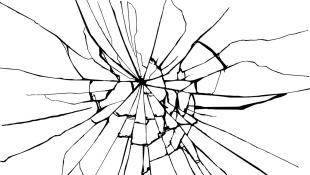
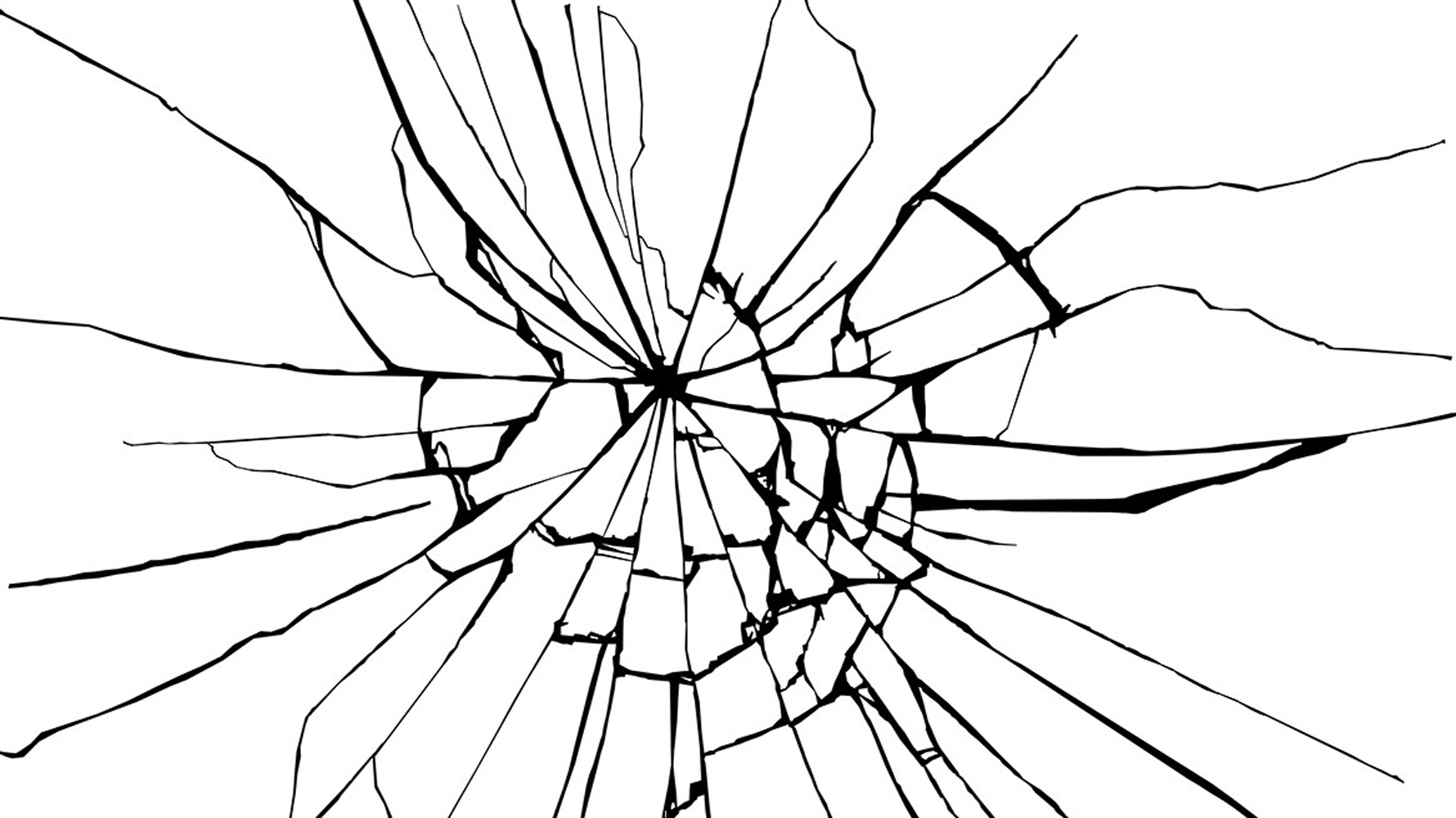
These issues are addressed in »FRAGILE«, the window exhibition by TEAM TAU Tina Born & Enrico Niemann. For the glass façade of the Deutsche Künstlerbund, the artist duo has created a site-specific intervention composed of delicate lines that evoke the appearance of cracked or damaged panes of glass. The installation also includes a text written especially for the exhibition, reflecting the artists' engagement with the annual theme, »Freedom of Art«. As an integral part of the installation, the text is displayed in the exhibition window and is reproduced in full below.
Text by TEAM TAU Tina Born & Enrico Niemannn, 2026
»FRAGILE«
Structures resembling broken glass are being applied to the windows of the Deutscher Künstlerbund.
Within the thematic context, these traces, as if a stone or something has been thrown, stand for an attack against artistic freedom.
The Association’s premises serve here as a symbolic representation of a place where this artistic freedom takes place. The glass, with its transparency, fragility and function as a protective membrane between the inside and the outside, is – to stay in the picture – damaged and cracked, yet remains intact as a whole.
Whilst some are currently advocating, in the realm of cultural policy, a so-called »German dominant culture« and exclusion, openly calling for censorship and striving for a far-reaching overhaul of cultural policy, others are opting for a sober cost-benefit analysis to stifle artistic diversity through rigorous budget cuts.
»Fragile« means brittle, vulnerable, or refers to something that can easily be thrown off balance.
All these characteristics can also be attributed to the arts and to artists, for their credo is to navigate uncharted territory, to elude simple solutions, categorisation or co-optation. This makes the free practice of the arts vulnerable, uncomfortable, dispensable to some, or simply dangerous.
Increasing external pressure can be damaging and paralysing, but it can also lead to a renewed awareness of one’s own strength and indivisibility, particularly when being part of a network.
Thus, the depicted glass-breakage formations can also be interpreted as structures that withstand an external, destructive force.
TEAM TAU Tina Born & Enrico Niemann
The collaboration between the Berlin-based visual artists Tina Born and Enrico Niemann within the framework of art-in-architecture projects has existed since 2023. In that year, the duo won first prize in the competition for an artwork in the outdoor space between the new building of the Bernhard Lichtenberg House and St. Hedwig’s Cathedral in Berlin-Mitte. Since then, TEAM TAU Tina Born & Enrico Niemann has participated in art-in-architecture competitions as well as in interventions and conceptual proposals for urban spaces.
Alongside a profound engagement with specific sites, with the aim of creating something unconventional that emerges from within the given context, their designs are characterized by reduction, a subtle interplay with established modes of perception, and an interest in socio-political questions.